To remove smoke odor from walls and furniture, clean smoke residue from surfaces, deodorize fabrics and upholstery, purify the air, and neutralize odor molecules using professional treatments like ozone, hydroxyl, or thermal fogging. Long-term odor removal also requires cleaning HVAC systems and sealing surfaces affected by soot or nicotine residue.
Why Smoke Odor Is So Hard to Remove
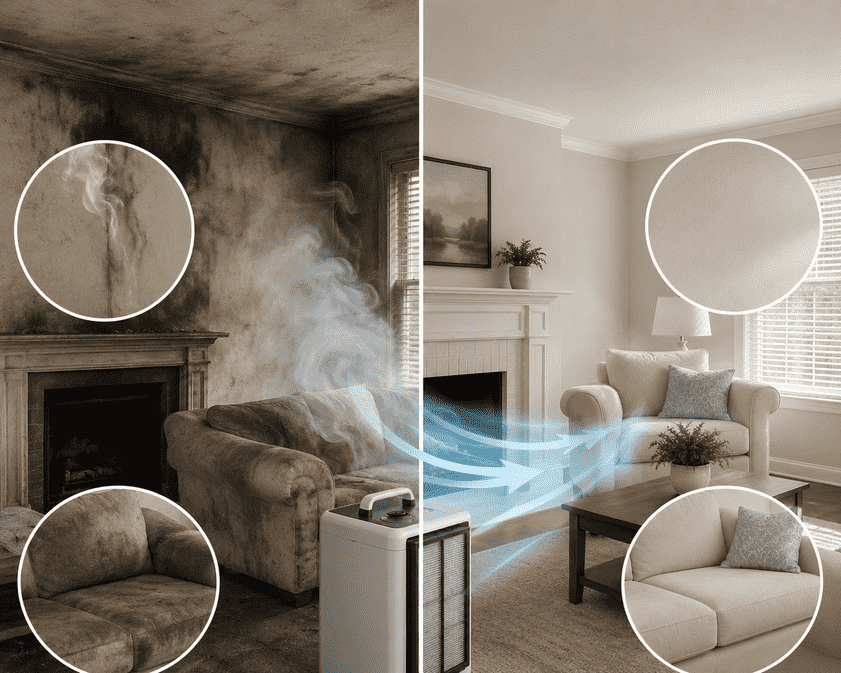
Smoke odor is one of the most difficult smells to eliminate because smoke particles are microscopic, oily, and highly adhesive. They settle deep into walls, ceilings, upholstery, wood furniture, carpet fibers, insulation, and HVAC systems.
In Northeast Ohio homes, smoke odor problems often become worse during winter because homes stay closed up for months with limited ventilation. Humidity also causes smoke residue trapped inside porous materials to reactivate over time.
Whether the odor comes from cigarettes, cooking smoke, fireplaces, or fire damage, the smell usually lingers because the source contamination was never fully removed. Air fresheners and household sprays may temporarily mask the odor, but they rarely eliminate the smoke particles causing it.
What Causes Lingering Smoke Smell?
- Tobacco Smoke Residue: Cigarette smoke leaves behind nicotine, tar, and oily residue that sticks to walls, ceilings, blinds, furniture, and fabrics. Over time, this creates yellow staining and a persistent stale smoke smell.
- Fire & Soot Damage: Fire smoke contains soot, ash, burnt organic particles, and acidic residue that penetrate deeply into drywall, insulation, flooring, and furniture materials.
- Smoke Inside HVAC Systems: Smoke particles often circulate through air ducts and HVAC systems, spreading odor throughout the entire home even after surfaces are cleaned.
- Porous Materials Absorbing Odor: Carpet padding, upholstery, wood furniture, insulation, drywall, curtains, and fabric materials absorb smoke odor quickly and continue releasing it over time.
Signs Smoke Odor Is Embedded Deep Inside the Home
Some smoke contamination goes beyond surface-level cleaning.
Warning signs include:
- Smoke smell returning after cleaning
- Yellow or brown staining on walls or ceilings
- Smoke odor strongest during humid weather
- Odor coming through HVAC vents
- Stale smell trapped inside furniture or upholstery
- Lingering smoke smell in closets or basements
- Soot residue around vents or trim
If smoke odor remains after repeated cleaning, professional deodorization is often necessary.
Step 1: Remove Smoke Residue from Walls & Ceilings
Smoke particles stick aggressively to painted walls and ceilings.
Use Proper Smoke Cleaning Solutions
Professional smoke cleanup often uses enzymatic cleaners or vinegar-based solutions designed to break down smoke residue and odor-causing particles.
A common smoke residue cleaning mixture includes:
- White vinegar
- Warm water
- Mild dish soap
- Baking soda
Avoid using bleach or ammonia because these chemicals can react with smoke residue and worsen odors or damage surfaces.
Wash Walls Thoroughly
Smoke cleanup should include:
- Walls
- Ceilings
- Trim
- Doors
- Baseboards
- Cabinets
- Light fixtures
Skipping ceilings is one of the most common smoke odor cleanup mistakes homeowners make.
Seal & Repaint if Necessary
If odor remains after cleaning, odor-blocking primer may be needed before repainting. Shellac-based and stain-blocking primers help seal in remaining smoke particles trapped inside porous painted surfaces.
Step 2: Clean Smoke Odor from Furniture
Smoke odor settles deep into furniture materials, especially upholstery and unfinished wood.
Upholstered Furniture
Professional upholstery smoke odor removal often includes:
- HEPA vacuuming
- Hot water extraction
- Enzymatic deodorizing
- Fabric-safe odor neutralizers
Baking soda may help temporarily absorb odor, but deeply embedded smoke contamination often requires professional cleaning.
Wood Furniture
Wood furniture absorbs smoke residue into its grain and surface finish.
Cleaning often involves:
- Vinegar-based wood cleaning
- Gentle degreasing agents
- Activated charcoal odor absorption
- Professional ozone treatment if necessary
Leather Furniture
Leather easily traps smoke odor inside its pores.
Professional cleaning and conditioning help remove residue without drying or damaging the material.
Step 3: Remove Smoke Odor from the Air
Even after surfaces are cleaned, airborne smoke particles and odor molecules often remain inside the home.
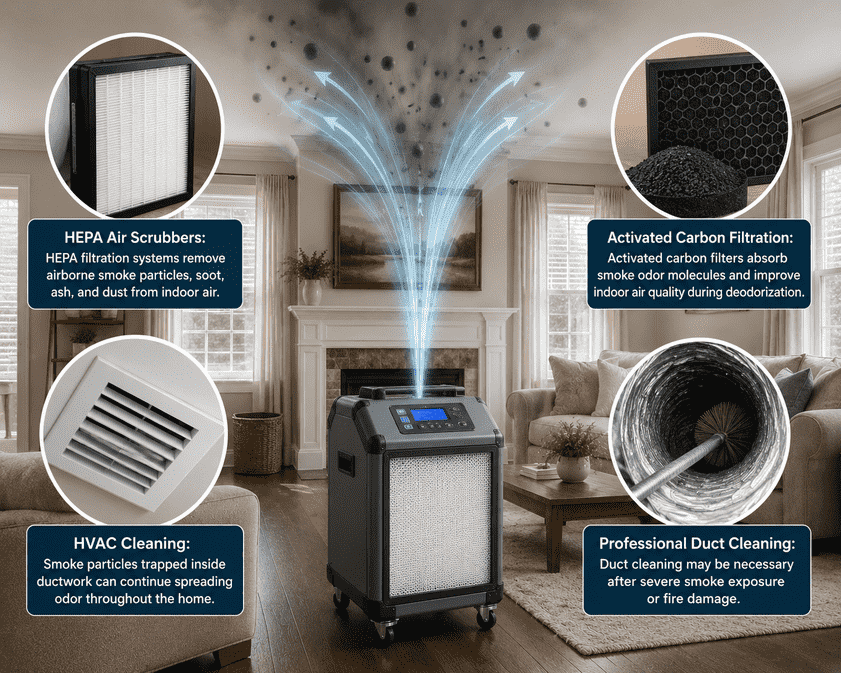
- HEPA Air Scrubbers: HEPA filtration systems remove airborne smoke particles, soot, ash, and dust from indoor air.
- Activated Carbon Filtration: Activated carbon filters absorb smoke odor molecules and improve indoor air quality during deodorization.
- HVAC Cleaning: Smoke particles trapped inside ductwork can continue spreading odor throughout the home.
Professional duct cleaning may be necessary after severe smoke exposure or fire damage.
Step 4: Use Professional Smoke Odor Neutralization
Deep smoke contamination often requires professional deodorization technology.
Ozone Treatment
Ozone generators oxidize smoke odor molecules and neutralize deeply embedded odors inside walls, furniture, and fabrics.
Because ozone is unsafe for occupied spaces during treatment, it should only be performed by trained professionals.
Hydroxyl Generators
Hydroxyl technology neutralizes smoke odor safely while occupants remain inside the home.
Hydroxyl treatments work well for:
- Homes
- Apartments
- Offices
- Commercial buildings
Thermal Fogging
Thermal fogging creates microscopic deodorizing particles that travel through cracks, fabrics, and hidden spaces the same way smoke originally spread.
This process helps neutralize odor trapped deep inside porous materials.
Step 5: Remove Materials That Cannot Be Saved
Some porous materials absorb smoke odor too deeply to clean completely.
Common items requiring replacement include:
- Carpet padding
- Insulation
- Cardboard storage boxes
- Curtains or drapes
- Severely damaged upholstery
- Smoke-saturated drywall
Leaving heavily contaminated materials inside the home often causes odors to return later.
Why DIY Smoke Odor Removal Often Fails
Many homeowners try to eliminate smoke smell using candles, air fresheners, bleach, or household cleaners without addressing the source contamination.
Common DIY mistakes include:
- Repainting before cleaning
- Ignoring HVAC contamination
- Using bleach on soot residue
- Failing to clean ceilings
- Skipping odor neutralization
- Leaving porous materials untreated
Smoke particles penetrate much deeper than most people realize.
If odor molecules remain trapped inside walls, insulation, or furniture, the smell usually returns quickly.
Why Professional Smoke Odor Removal Works Better
Professional smoke odor removal focuses on eliminating odor at the molecular level instead of masking it temporarily.
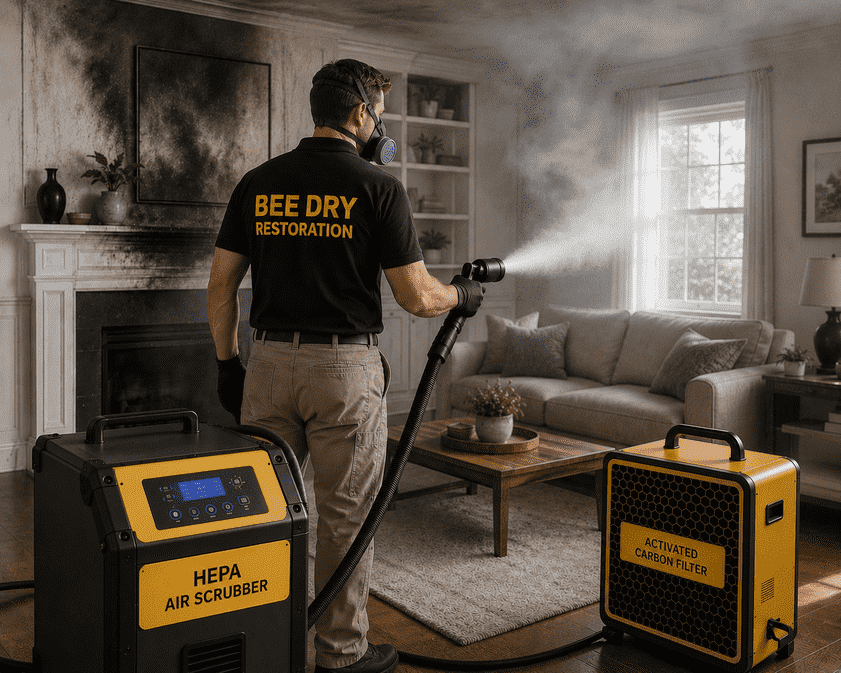
Bee Dry Restoration of Cleveland uses:
- HEPA air scrubbers
- Ozone treatments
- Hydroxyl generators
- Thermal fogging equipment
- Smoke residue cleaning methods
- Advanced deodorization technology
Our team also addresses soot cleanup, indoor air quality issues, structural contamination, and odor prevention long-term.
Why Smoke Damage Is Worse in Northeast Ohio Homes
Homes throughout Cleveland and Northeast Ohio experience environmental conditions that make smoke odor harder to remove.
These conditions include:
- Closed winter environments
- High humidity
- Seasonal condensation
- Older insulation materials
- Limited winter ventilation
- Porous older construction materials
Humidity and moisture often reactivate smoke particles trapped inside walls, furniture, and ductwork.
That is why professional odor removal is often necessary for long-term results.
When Should You Call a Professional Smoke Odor Removal Company?
You should contact a professional smoke odor removal company if:
- Smoke smell keeps returning
- Walls or ceilings show yellow staining
- Smoke odor spreads through vents
- Furniture remains saturated with odor
- DIY cleaning has failed
- Fire damage occurred recently
- Indoor air quality feels poor
Persistent smoke odor usually means smoke particles are still trapped somewhere inside the structure.
Call Bee Dry Restoration for Professional Smoke Odor Removal
Bee Dry Restoration of Cleveland provides professional smoke odor removal, soot cleanup, deodorization, indoor air quality solutions, and smoke damage restoration throughout Cleveland and Northeast Ohio.
Our team uses advanced deodorization methods designed to eliminate smoke odor from walls, furniture, carpet, HVAC systems, and hidden structural materials.
Whether the odor comes from cigarette smoke, fire damage, cooking smoke, or long-term smoke exposure, we provide solutions focused on complete odor elimination and long-term indoor air quality improvement.
Contact Bee Dry Restoration today to schedule your smoke odor inspection.
Frequently Asked Questions
Nicotine, tar, and smoke oils penetrate porous materials like drywall, carpet, insulation, upholstery, and wood surfaces where they continue releasing odor long after smoking stops.
Yes. Smoke particles and soot can circulate through HVAC systems and ductwork, spreading odor throughout the home even after surfaces are cleaned.
Professional smoke residue cleaning followed by odor-blocking primer and deodorization treatments is usually the most effective long-term solution.
No. Walls must first be cleaned thoroughly and sealed with odor-blocking primer before repainting, or the smell may return.
Humidity reactivates smoke particles trapped inside porous surfaces, making the odor more noticeable during damp or humid conditions.
Carpet padding, insulation, smoke-saturated drywall, upholstery, curtains, and porous storage materials often require replacement if contamination is severe.