The snow is finally melting, temperatures are climbing, and winter feels like it is letting go. Then water starts showing up where it never has before. A ceiling stain appears. The basement smells damp. A wall feels cold and wet even though there is no rain.
This is not bad luck. It is how snow thawing actually works.
Water damage often gets worse after snow starts thawing, not during the storm. Thawing snow creates slow, persistent water intrusion that spreads quietly through building materials. By the time homeowners notice the damage, moisture has already traveled far beyond the original entry point.
At Bee Dry Restoration of Cleveland, we see this pattern every year. Homes and commercial buildings that seemed fine during winter suddenly develop serious moisture problems as snow begins to melt. Understanding why this happens helps explain why fast action and proper drying matter so much during thaw season.

Why Does Water Damage Get Worse After Snow Thaws?
Water damage worsens after snow thaws because melting snow enters structures slowly, refreezes overnight, and repeatedly forces moisture deeper into roofs, walls, foundations, and plumbing systems, causing hidden damage that appears later.
Snow Thawing Creates a Different Kind of Water Damage
Snow thawing behaves very differently from rain.
Rain usually falls fast and drains away quickly. Snow thawing happens gradually. Water melts during the day, refreezes at night, and melts again. This repeated freeze and thaw cycle pushes water into places it does not normally go.
Instead of draining off the roof or away from the foundation, meltwater lingers. It pools near roof edges, soaks into exterior walls, and saturates soil around foundations. Each cycle forces moisture deeper into building materials.
This slow intrusion is why damage often appears after the snow is gone.
How Freeze and Thaw Cycles Make Damage Worse
Freeze and thaw cycles are the main reason water damage accelerates during thawing periods.
When snow melts, water flows into small gaps in roofing, siding, flashing, and foundation joints. Overnight temperatures drop, and that water refreezes. Ice expands, widening cracks and seams. When temperatures rise again, more water flows in and travels further inside.
This process repeats multiple times until all snow has melted. Each cycle increases moisture penetration and expands the affected area. By the time the thaw is complete, water may have spread across walls, ceilings, insulation, flooring, and framing.
Where Thawing Snow Water Usually Enters a Building
Roof Systems and Attics
Roof edges, valleys, vents, and flashing are common entry points. Meltwater backs up and slips beneath roofing materials, then drips into attic spaces and ceilings. Ceiling stains often appear days after thawing begins.
Exterior Walls and Siding
Snow piled against siding allows water to soak into wall assemblies. As snow thaws, water enters through seams, trim joints, and fastener points, then moves downward inside wall cavities.
Foundations and Basements
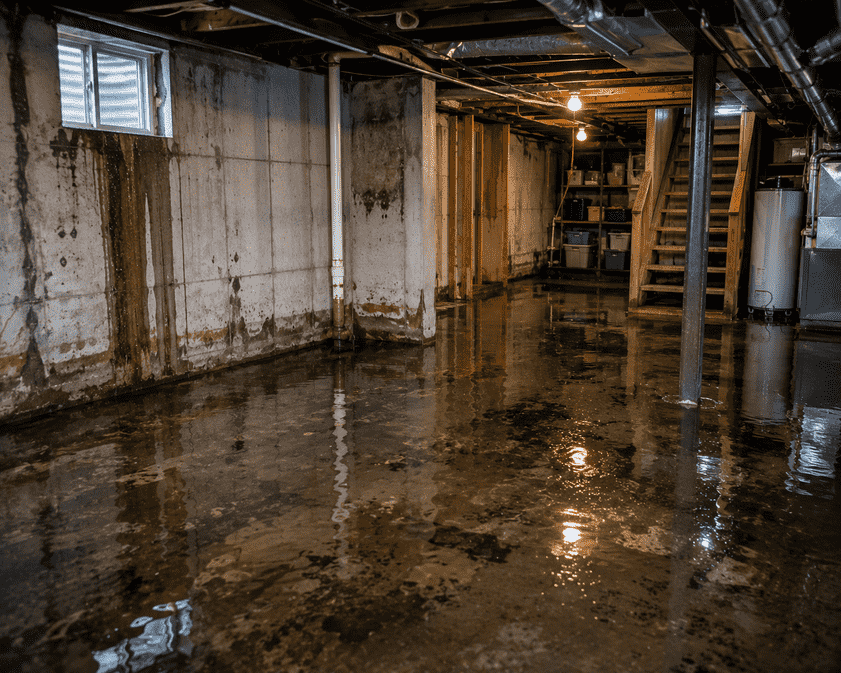
Thawing snow saturates soil around foundations. Groundwater pressure increases, forcing water through cracks, joints, and porous materials. This often causes basement seepage without rainfall.
Plumbing Systems After Freezing
Pipes that froze during winter may develop small fractures. When thawing restores water flow, those cracks begin leaking behind walls, under floors, or in crawl spaces. These leaks often go unnoticed until moisture damage spreads.
Why Water Damage Often Appears Days or Weeks Later
Water does not always show up where it enters.
Moisture moves through insulation, framing, and drywall following gravity and airflow paths. It can take days or weeks for water to reach a visible surface. During that time, materials remain wet and damage continues.
This delayed appearance is why homeowners often say, “The snow is gone. Why is this happening now?”
The answer is simple. The damage was already underway.
Hidden Moisture Is the Real Problem After Thawing
After snow starts thawing, the biggest threat is hidden moisture.
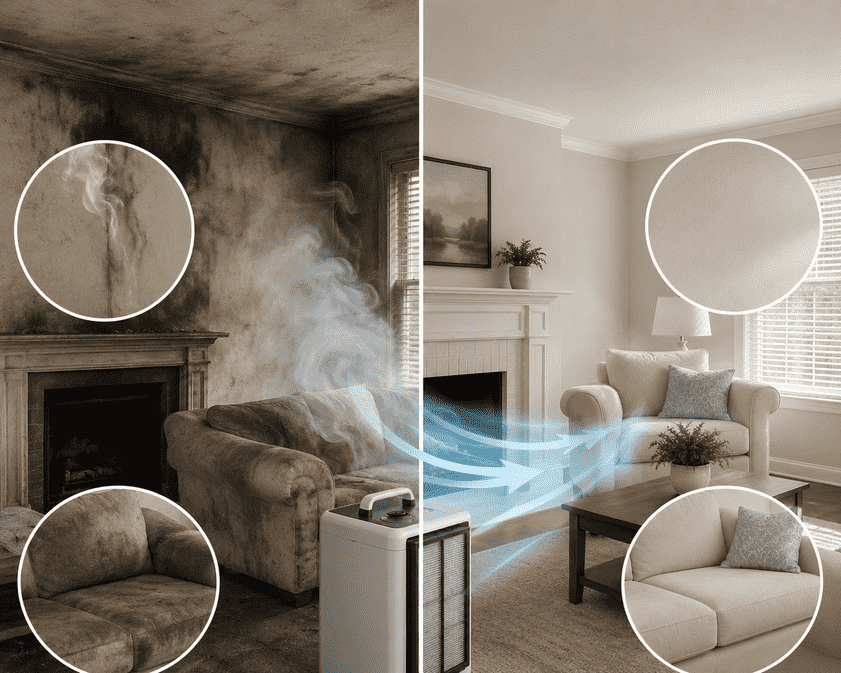
Water trapped inside walls, ceilings, and floors does not evaporate on its own. Modern buildings are sealed tightly for energy efficiency, which slows natural drying. Moisture remains inside materials, weakening them and creating ideal conditions for mold growth.
Surface drying does not fix this. Hidden moisture continues to spread and cause damage long after visible areas feel dry.
Why Water Damage Accelerates After Thawing Ends
Once thawing ends, moisture is already embedded deep in the structure. As indoor temperatures rise, that moisture begins migrating further through materials. This can cause:
- Expanding stains on ceilings and walls
- Warping or softening of drywall and wood
- Persistent musty odors
- Rising indoor humidity
- Mold growth in hidden areas
The damage becomes more noticeable, not because the problem is new, but because it has reached the surface.

Why Fans and Store Dehumidifiers Are Not Enough
After water intrusion, many homeowners try to dry affected areas using fans or portable dehumidifiers. While these tools can help reduce surface moisture, they are not designed to remove water trapped inside walls, floors, insulation, or structural materials. Snow thaw water damage is especially problematic because moisture often spreads slowly and settles deep inside the structure before any signs appear.
Without professional drying:
- Moisture remains inside walls and floors
- Odors return after drying
- Materials continue deteriorating
- Mold risk increases
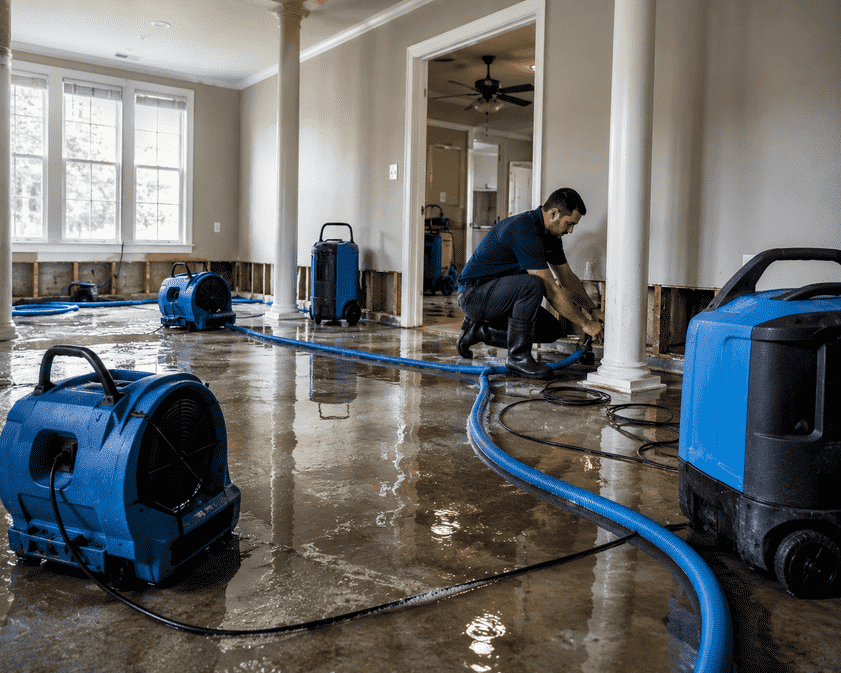
Professional water drying uses controlled airflow placement, commercial-grade dehumidification, and ongoing moisture monitoring to pull water out of the entire structure. Moisture levels are measured throughout the process to confirm materials have returned to safe conditions. This approach ensures hidden moisture is fully addressed, not just masked, reducing the risk of long-term damage and mold growth.
How Professionals Identify Thaw Related Water Damage
Visual inspection alone is not enough after snow thawing.
Professionals use moisture meters and thermal detection to locate water inside walls, ceilings, floors, insulation, and framing. This allows technicians to map how far moisture has spread and identify affected materials accurately.
This targeted approach prevents unnecessary demolition while ensuring no hidden moisture is missed.
The Critical Role of Water Drying After Snow Thawing
Water drying is the most important step after thaw-related water intrusion because it addresses moisture that cannot be seen. When snow thaws, water often enters slowly and settles deep inside walls, floors, insulation, and structural framing. If that moisture is not removed correctly, damage continues long after visible water disappears.
Proper water drying removes moisture before materials deteriorate permanently. Professional drying is a controlled process that includes:
- Strategic airflow placement to move moisture out of building materials rather than pushing it deeper into the structure
- Commercial-grade dehumidification to pull moisture from walls, subfloors, insulation, and framing and remove it from the indoor environment
- Ongoing moisture monitoring to track drying progress and confirm that hidden moisture pockets are fully addressed
Drying continues until materials return to safe, stable moisture levels based on readings, not just until surfaces feel dry. Skipping steps or rushing the drying process almost always leads to recurring damage, lingering odors, or mold growth after snow thawing events.
Why Homeowners Trust Bee Dry Restoration of Cleveland
Bee Dry Restoration of Cleveland specializes in moisture inspection, water extraction, professional water drying, and water damage restoration related to snow thawing and freeze cycles. Our team understands how thawing snow interacts with roofs, walls, foundations, and plumbing systems.
We rely on measured moisture data, not guesswork, to guide drying and restoration decisions. This prevents repeat damage, lingering moisture issues, and long term structural problems. If water damage worsens after snow starts thawing, contact Bee Dry Restoration of Cleveland for a professional assessment and clear next steps before the damage spreads further.
Frequently Asked Questions
When snow thaws, water enters homes slowly through roofs, walls, foundations, and plumbing, spreading deeper with each freeze and thaw cycle.
Yes. Snow melt alone can saturate building materials and raise groundwater levels, leading to leaks and moisture problems without rainfall.
Water damage can appear days or even weeks later as moisture migrates through walls, ceilings, and floors.
Snow thaw causes slow, repeated moisture intrusion that stays hidden longer, unlike storms where damage is usually immediate and visible.
Yes. Pipes can crack while frozen and begin leaking once temperatures rise and water pressure returns.
No. Surface drying does not remove moisture trapped inside walls, floors, or insulation.