To use a moisture meter for walls, select the correct meter setting, test a known dry area for a baseline reading, then scan or probe the wall in multiple locations. Compare readings to identify elevated moisture levels that may indicate water damage, hidden leaks, moisture intrusion, or mold growth. Moisture meters are commonly used to inspect drywall, plaster, wall cavities, and structural framing after plumbing leaks, floods, roof leaks, or water damage incidents.
Water Damage Often Starts Behind the Wall
Most homeowners do not discover water damage until they see stains, peeling paint, warped drywall, or mold growth. The problem is that moisture often accumulates inside wall cavities long before visible signs appear.
A small plumbing leak, roof leak, window leak, or condensation problem can slowly saturate drywall and insulation for weeks or even months. By the time visible damage appears, repairs can become significantly more expensive. This is why moisture meters have become one of the most important tools used by restoration professionals, home inspectors, contractors, and property owners.
A moisture meter helps identify hidden moisture before it turns into structural damage, mold contamination, poor indoor air quality, and costly restoration work.
At Bee Dry, moisture meters are used daily during water damage inspections, structural drying projects, leak detection investigations, and mold remediation assessments. Understanding how these devices work can help homeowners detect moisture problems earlier and make better decisions when water damage occurs.
What Is a Moisture Meter?
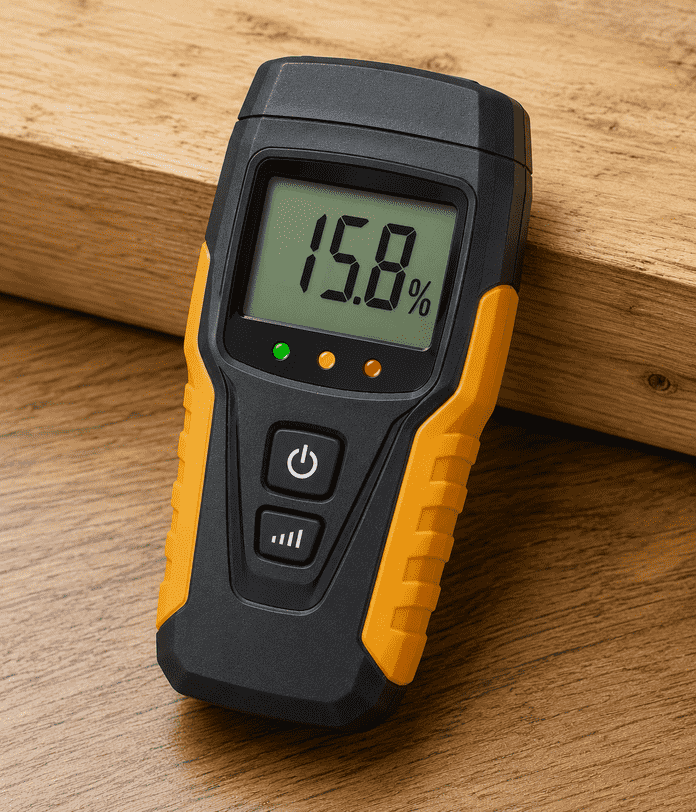
A moisture meter is a handheld device used to measure moisture content within building materials.
The tool helps determine whether materials such as drywall, plaster, wood framing, insulation, flooring, or concrete contain excess moisture.
Moisture meters are commonly used for:
- Water damage inspections
- Leak detection
- Mold investigations
- Structural drying verification
- Property inspections
- Basement moisture assessments
- Flood damage restoration
- Insurance documentation
Rather than relying on visible signs alone, moisture meters provide measurable data that helps determine whether moisture is present behind walls and other concealed areas.
Types of Moisture Meters Used for Walls
Understanding the different types of moisture meters is important before testing walls.
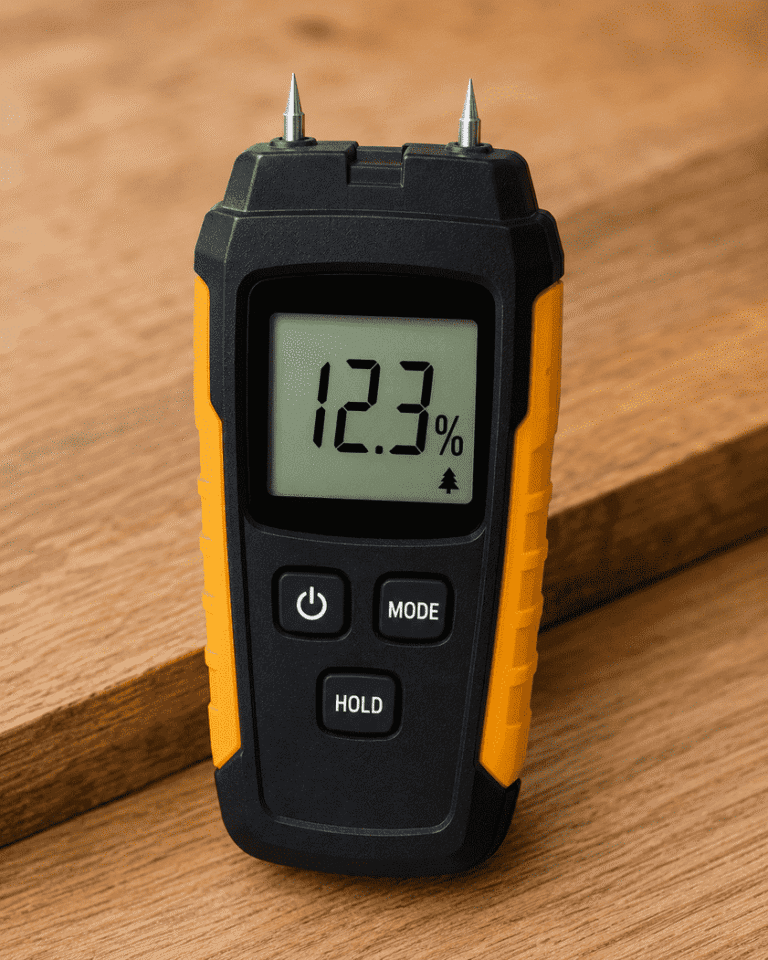
Pin Moisture Meters
Pin moisture meters use two small probes that penetrate the material being tested.
The meter measures electrical resistance between the pins. Since water conducts electricity, higher moisture levels result in lower resistance and higher moisture readings.
Pin meters are often used for:
- Drywall moisture testing
- Wood moisture content testing
- Stud moisture readings
- Confirming wet areas identified during inspections
Because they penetrate the material, they provide highly accurate readings at specific locations.
Pinless Moisture Meters
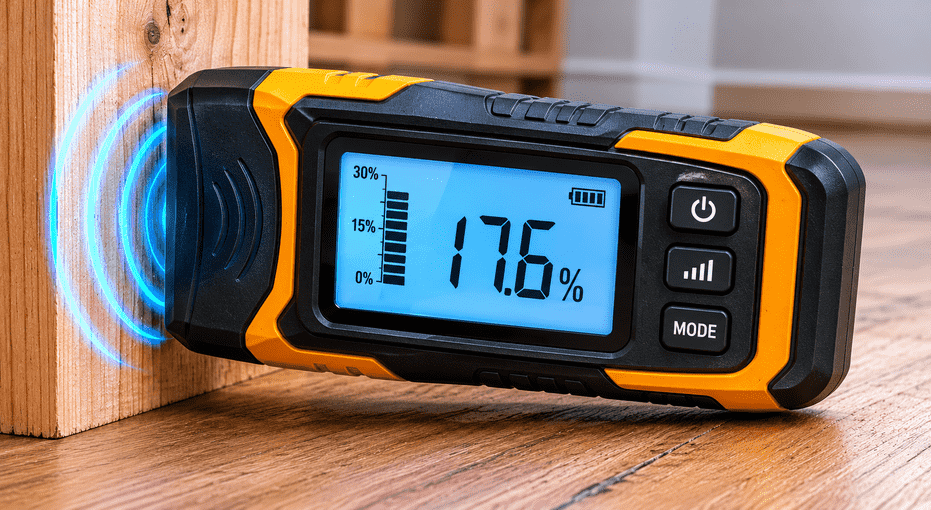
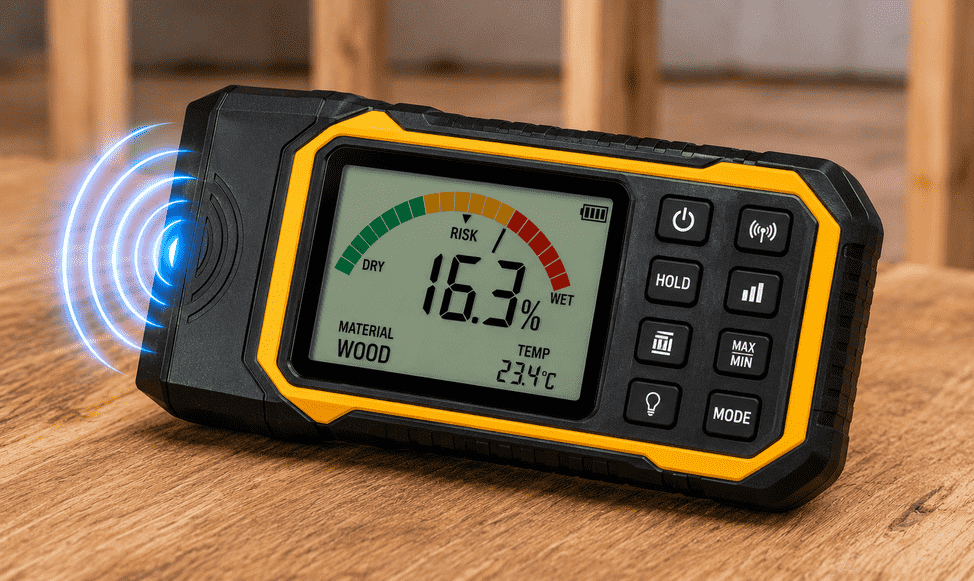
Pinless moisture meters use electromagnetic sensors to scan beneath the surface without creating holes.
These meters are popular because they:
- Cover larger areas quickly
- Do not damage walls
- Detect hidden moisture beneath drywall
- Help identify moisture patterns
Pinless moisture meters are often used during water damage restoration projects to locate wet building materials and monitor drying progress.
Combination Moisture Meters
Some professional-grade moisture meters combine both technologies.
These devices allow technicians to quickly scan large areas with a pinless sensor and then verify moisture levels using pin probes when necessary.
Why Moisture Testing Walls Is Important
Walls can absorb significant amounts of water without obvious signs of damage.
Hidden moisture can result from:
- Plumbing leaks
- Roof leaks
- Window leaks
- Appliance leaks
- Basement seepage
- Flooding
- Ice dam water damage
- Condensation problems
- HVAC leaks
Without proper moisture detection, water can remain trapped inside walls and create ideal conditions for mold growth.
Moisture testing helps identify:
- Hidden water damage
- Wet insulation
- Saturated drywall
- Moisture intrusion
- Mold risks
- Drying progress after restoration
The earlier moisture is discovered, the easier and less expensive it is to address.
How Moisture Meters Work
Moisture meters measure moisture differently depending on the type of device.
Pin moisture meters calculate moisture content using electrical resistance.
Pinless moisture meters use radio frequency or electromagnetic technology to detect changes in density caused by water.
Both methods help identify abnormal moisture conditions within wall assemblies.
When used properly, moisture meters provide valuable information about:
- Moisture content
- Water migration
- Drying conditions
- Potential mold growth areas
- Structural moisture concerns
How to Use a Moisture Meter for Walls
Step 1: Identify Areas of Concern
Begin by locating areas where moisture may be present.
Common problem areas include:
- Around windows
- Around doors
- Under plumbing fixtures
- Near water supply lines
- Around tubs and showers
- Beneath roof leaks
- Exterior walls
- Basement walls
- Areas with staining or discoloration
If a wall smells musty or feels damp, it should also be tested.
Step 2: Establish a Baseline Reading
Before testing a suspicious area, measure a wall that is known to be dry.
This baseline provides a comparison point.
Every building material contains some level of normal moisture, so understanding what is considered normal for your home helps identify abnormal readings.
Step 3: Select the Proper Material Setting
Many moisture meters allow users to choose settings for different materials.
Common settings include:
- Drywall
- Plaster
- Wood
- Concrete
- Masonry
Selecting the correct material improves accuracy.
Step 4: Scan the Wall
For pinless meters, place the sensor flat against the wall and slowly move it across the surface.
For pin meters, carefully insert the probes into the wall material.
Take readings at multiple heights and locations to create a complete moisture profile.
Step 5: Compare Readings
Areas with significantly higher readings than surrounding materials often indicate hidden moisture.
If one section of drywall shows elevated moisture content compared to nearby areas, additional investigation may be necessary.
Step 6: Document Findings
Professional restoration companies document moisture readings throughout the drying process.
Homeowners can also record moisture readings to monitor changes over time.
Understanding Moisture Meter Readings
Many people purchase a moisture meter but are unsure how to interpret the results.
While exact readings vary by manufacturer, general guidelines include:
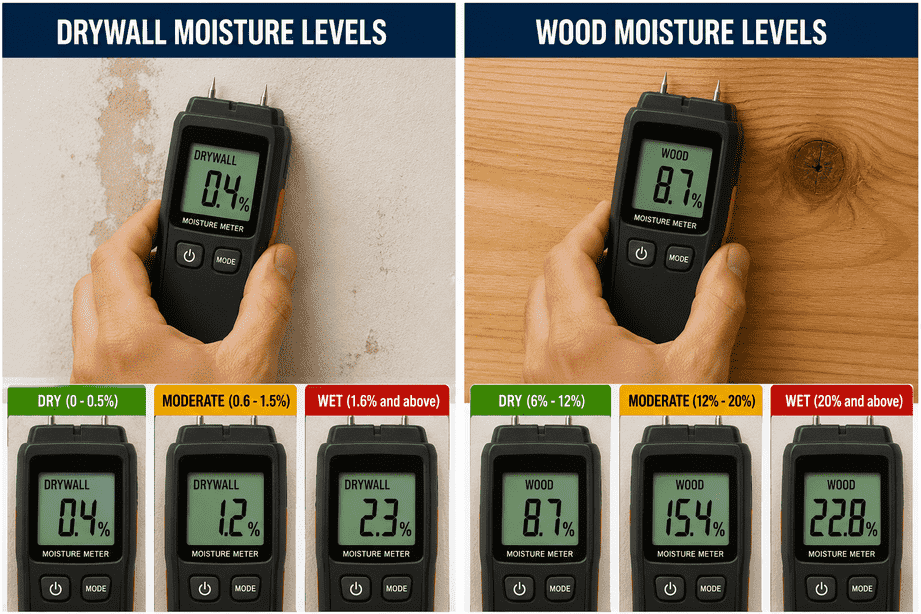
Drywall Moisture Levels
- 0% to 5% typically indicates dry conditions
- 5% to 12% may indicate elevated moisture
- Above 12% often suggests water damage or excessive moisture
Wood Moisture Levels
- 6% to 15% is generally considered normal
- 16% to 20% indicates elevated moisture
- Above 20% may support mold growth and wood deterioration
High readings do not automatically confirm damage, but they indicate areas that require further investigation.
Common Mistakes When Using a Moisture Meter
- Testing Only One Location: Moisture rarely spreads evenly. Testing multiple locations helps identify the full extent of water intrusion.
- Ignoring Material Differences: Wood, drywall, concrete, and plaster have different moisture characteristics. Using incorrect settings may produce misleading results.
- Misinterpreting Surface Moisture: Condensation on the surface can temporarily increase readings. Always evaluate environmental conditions before drawing conclusions.
- Failing to Compare Readings: A single reading provides limited information.
Comparing readings from multiple locations is often more useful than focusing on one number.
When Moisture Meter Readings Suggest a Bigger Problem
Elevated moisture levels may indicate:
- Hidden Plumbing Leaks: Water supply lines and drain lines often leak behind walls before visible damage occurs.
- Roof Leaks: Roof leaks frequently travel through wall cavities and insulation before becoming noticeable indoors.
- Window and Door Leaks: Poor flashing or deteriorated seals can allow water intrusion around openings.
- Basement Water Intrusion: Foundation moisture can migrate into lower wall assemblies and increase moisture content.
- Mold Growth Conditions: Persistent moisture creates ideal conditions for mold development.
If readings remain elevated over time, professional evaluation is recommended.
Moisture Meters and Mold Prevention
One of the most valuable benefits of moisture testing is mold prevention.
Mold requires three primary conditions:
- Moisture
- Organic material
- Favorable temperatures
Building materials already provide the second and third conditions.
Moisture is often the missing ingredient.
By identifying elevated moisture levels early, homeowners can address water intrusion before mold colonies develop.
This is especially important in:
- Basements
- Bathrooms
- Crawl spaces
- Attics
- Utility rooms
How Professionals Use Moisture Meters During Water Damage Restoration
At Bee Dry, moisture meters are used throughout every stage of the restoration process.
- Initial Inspection: Moisture readings help identify affected materials and determine the extent of water damage.
- Drying Plan Development: Technicians use moisture data to determine where dehumidifiers, air movers, and drying equipment should be placed.
- Monitoring Progress: Daily moisture readings track drying performance and identify areas that require additional attention.
- Final Verification: Before a project is considered complete, moisture meters verify that materials have returned to acceptable moisture levels.
This process helps reduce the risk of future mold growth and structural deterioration.
Should Homeowners Buy a Moisture Meter?
For many homeowners, a moisture meter can be a valuable tool.
It can help identify:
- Hidden leaks
- Water intrusion
- Basement moisture
- Roof leak damage
- Drying progress
- Potential mold risks
However, a moisture meter should not replace a professional water damage inspection when significant moisture problems are suspected.
Professionals use moisture meters alongside thermal imaging cameras, hygrometers, infrared technology, and moisture mapping techniques to obtain a more complete picture of moisture conditions.
Why Cleveland Homeowners Benefit from Moisture Testing
Homes throughout Northeast Ohio face moisture challenges from:
- Heavy rainfall
- Snowmelt
- Ice dams
- Basement seepage
- Aging plumbing systems
- Freeze-thaw cycles
These conditions increase the risk of hidden water damage inside walls.
Routine moisture testing can help homeowners identify issues before they become major restoration projects.
Trust Bee Dry for Moisture Detection and Water Damage Restoration
Finding moisture inside a wall is only the first step.
Determining the source of the moisture and properly drying affected materials is what protects the property long term.
Bee Dry Restoration uses professional moisture meters, thermal imaging technology, leak detection equipment, structural drying systems, and advanced restoration techniques to identify and resolve moisture problems throughout homes and businesses.
Whether you are dealing with a plumbing leak, basement water intrusion, roof leak, mold concern, or flood damage, our team can help restore your property and verify that materials are properly dried.
Contact Bee Dry Restoration of Cleveland today to schedule a professional moisture inspection.
Frequently Asked Questions
The exact threshold varies by material and meter type, but drywall readings above normal baseline levels often indicate moisture intrusion or water damage. If one section of a wall shows significantly higher readings than surrounding areas, further investigation is recommended to determine whether a plumbing leak, roof leak, or hidden moisture problem is present.
A moisture meter can help determine how wet the drywall is, but it cannot determine structural integrity on its own. If drywall remains saturated for an extended period, shows signs of deterioration, or supports mold growth, replacement may be necessary even after drying.
After a plumbing leak or water damage event, test around the visible source, below the affected area, near baseboards, around windows and doors, inside corners, and on adjacent walls. Water often travels farther than homeowners expect and may accumulate inside wall cavities before becoming visible.
Higher moisture readings near baseboards often occur because water follows gravity and settles in lower portions of the wall assembly. This is common after flooding, basement water intrusion, foundation seepage, or plumbing leaks hidden inside wall cavities.
Yes. Moisture meters are one of the most important tools used during mold inspections because mold growth requires moisture to develop. Identifying elevated moisture levels helps inspectors locate conditions that may support hidden mold behind drywall, plaster, insulation, or wood framing.
Water damage restoration professionals use moisture meters to create drying plans, monitor drying progress, and verify that walls, insulation, subfloors, and framing have returned to acceptable moisture levels. This helps prevent secondary damage and reduces the risk of future mold growth.