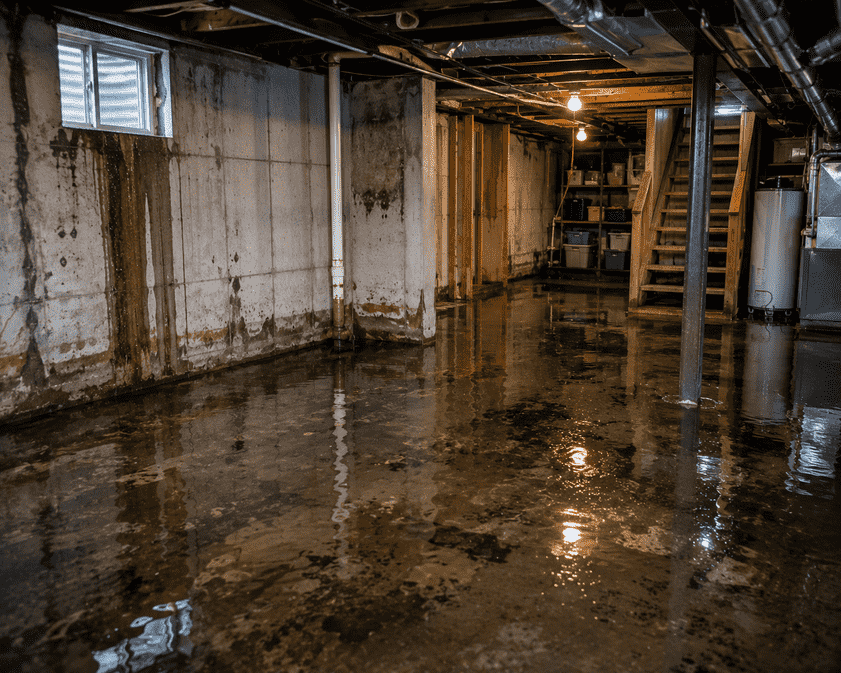
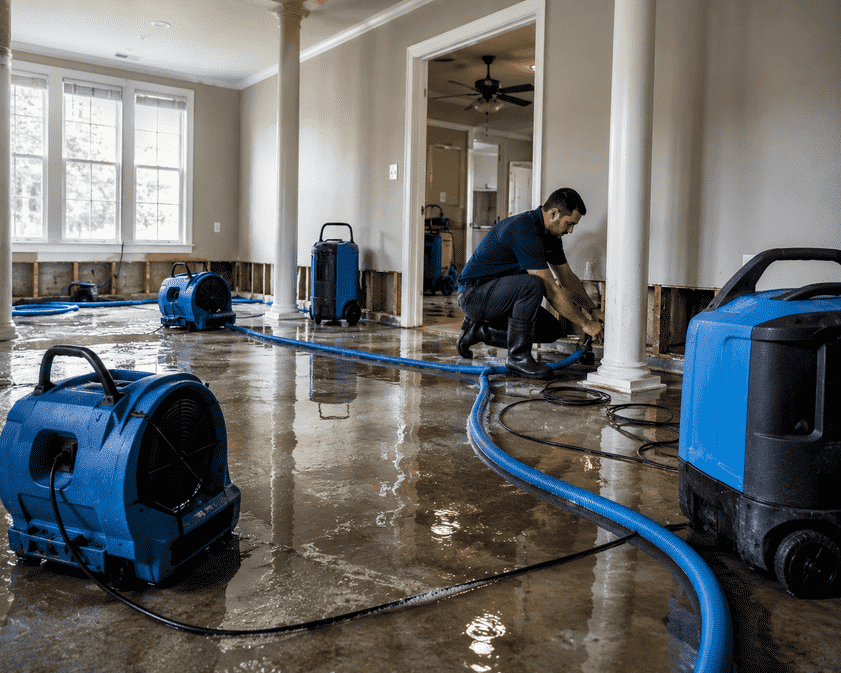
Basement flooding isn’t just a nuisance, it’s one of the most common, costly, and preventable problems for homeowners in the Cleveland area. When rain falls, the damage you see below-grade isn’t simply “rain + leak.” Instead, it’s the result of how your home’s foundation, soil conditions, drainage systems, and waterproofing all respond to that rain.
At Bee Dry Restoration of Cleveland, we’ve helped hundreds of local homeowners stop repeat flooding by addressing the real causes beneath the surface, not just the symptoms. This guide breaks down why basements flood when it rains, what’s happening underground, and how to stop it for good.

Why Cleveland Homes Are Prone to Basement Flooding
Cleveland’s older housing stock and clay-heavy soil make basements especially vulnerable. Dense, compact soil holds water near foundations, creating the perfect conditions for leaks. Add heavy rain, melting snow, or a blocked drainage path, and that trapped water has nowhere to go but in.
Many homes also rely on outdated drainage systems or improperly sloped yards, which direct water toward not away from the foundation. Combine that with years of settling and patch repairs, and you’ve got a basement ready to flood every time it rains.
Top Causes of Basement Flooding When It Rains
Let’s dive into why your basement takes on water. These are the most common root causes (with local context) for flooding during rainfall and storms.
A. Hydrostatic Pressure & Saturated Soil
When rainfall or snow-melt saturates the ground, the soil around your foundation becomes full of water. That water exerts pressure (hydrostatic pressure) on foundation walls and floors, and if there are cracks or weak points, the water will invade. Bee Dry foundation/repair specialist explains:
When the ground around your home becomes saturated, the natural flow of groundwater is disrupted by your foundation. That trapped water builds up against your basement walls, creating intense hydrostatic pressure, often thousands of pounds of force pressing inward. Over time, even the strongest concrete can’t resist that pressure.
In Cleveland’s dense, clay-heavy soil, this pressure pushes water through tiny cracks, joints, and gaps in your foundation. The heavier the rain, the more pressure builds until the water finds a way inside.
In simple terms: saturated ground + trapped water = pressure pushing in.
B. Poor Exterior Drainage & Grading
Even moderate rain can flood your basement if your lot is sloped toward the house, the downspouts discharge too close to the foundation, or the soil around the home was replaced poorly (creating a “clay bowl” effect). For example:
- Clogged gutters/downspouts lead to overflow and water pooling near foundation.
- Soil re-placed around a home sometimes isn’t compacted enough, leading to water pooling around the walls instead of running off.
Action point: make sure water is directed away from your foundation, not toward it.
C. Cracks in Walls or Floors, Leaky Windows, Seams
Even the smallest crack or seam can become a direct entry point once the soil outside is saturated. Under pressure, water will exploit any weakness around pipes, tie rods, floor joints, or window wells.
Bee Dry’s advice: seal cracks with professional-grade polyurethane or hydraulic cement, but only after resolving the root cause of the pressure. Surface fixes alone won’t stop recurring leaks.
D. Sump Pump Failure or Lack Thereof
Your sump pump is the heart of your basement’s defense system. When rainwater drains toward the interior system, the pump should move it safely away. But if the pump fails, loses power, or can’t keep up, water quickly backs up and floods the floor.
At Bee Dry, we always tell homeowners: test your sump pump quarterly, clean the pit, and install a battery backup. A few minutes of maintenance before a storm can save you thousands in cleanup.
Bottom line: test your sump pump often, keep it clean, and always have a battery backup. One quick check before the next storm can save you thousands in damage.
E. Sewer Backups or High Storm Runoff
In Cleveland’s older neighborhoods, heavy rainfall can overwhelm the combined storm and sewer systems. When that happens, water or sewage, can back up through basement drains and plumbing fixtures.
Our team often installs backflow prevention valves to keep that from happening. Regular main-line inspections and quick attention to slow drains before a storm can prevent major contamination and costly repairs later.

How to Spot Basement Flooding Early
Cleveland homeowners can save thousands in repairs by catching warning signs early. Our team at Bee Dry Restoration of Cleveland has seen that moisture problems nearly always give off clues before you see standing water.
Water Stains and Discoloration
Dark, damp patches on walls or floors especially along cove joints where the wall meets the floor are often the first sign that water is finding its way inside.
Foundation Cracks
Different cracks reveal different problems:
- Shrinkage cracks form as concrete cures; they’re not structural but still allow seepage.
- Bulging cracks come from pressure pushing inward, a serious warning sign.
- Settlement cracks widen at the top and show foundation movement.
Even a hairline opening can allow rainwater through once the soil is saturated.
The White Warning Sign (Efflorescence)
White, chalky residue on walls means water has already passed through the concrete, leaving minerals behind. The powder itself is harmless but signals moisture intrusion that can lead to future leaks.
Musty Odors and Mold
A persistent musty smell means moisture is already trapped somewhere. Mold can grow within 24–48 hours after water exposure and threatens both air quality and structure.
Dampness and High Humidity
If your basement feels muggy or you see condensation on pipes or windows, moisture is already entering. High humidity today can mean standing water tomorrow.
Bee Dry tip: Inspect your basement after each heavy rain, not just when you see water. Early detection prevents costly damage.
The Hidden Reasons It Keeps Happening
If your basement floods more than once, it’s not random, it’s systemic. Here’s why it repeats:
- Hydrostatic pressure isn’t relieved. Water continues to push inward after every storm.
- Drainage paths are blocked. Downspouts, gutters, or yard slopes still direct water toward the house.
- Cosmetic fixes mask real problems. Painting or finishing walls traps moisture instead of redirecting it.
- Maintenance is skipped. Sump pumps, drains, and grading go unchecked until they fail.
At Bee Dry Restoration, we stress that preventing flooding isn’t about how much rain falls, it’s about how well your home handles that rain.
How to Prevent Basement Flooding When It Rains
Here are actions you can take to reduce or eliminate basement flooding when rain hits, specifically for Cleveland-area homes:
Exterior Drainage Fixes
- Clean gutters and downspouts at least twice a year (fall and spring). Clogged gutters = overflow by foundation.
- Ensure downspouts extend at least 6 to 10 feet away from the foundation and discharge into an area that will carry the water away (not toward your neighbour’s home).
- Re-grade soil around your home so it slopes away at 1 inch per foot for at least 5 feet.
- Check for the “clay bowl” effect: soil around foundation should be well-compacted and free-draining
Foundation & Waterproofing Measures
- Inspect any cracks in walls or floors and seal them with polyurethane or hydraulic cement.
- Consider an interior drainage system/perimeter drain + sump pump if you don’t already have one. Reinforce this with waterproofing membranes if the basement is finished.
- Install a battery-backed sump pump system so you’re protected during power outages. The restoration article emphasizes proper drainage and sump pump maintenance.
Maintenance and Monitoring
- Test your sump pump quarterly (float, discharge line, check valve) and clean pump pit.
- Inspect window wells: debris and water pooling there can lead to leaks via window/seal.
- After a heavy rain, check for moisture or seepage within 24-48 hours. Quick detection = smaller cost.
- Consider installing a water-alarm or humidity sensor in the basement so you’re warned early of rising moisture.
When You Can’t DIY: Call the Pros
If you’re dealing with repeated flooding, wall bowing, or multiple water entry points, it’s time to bring in experts. At Bee Dry Restoration of Cleveland, we know that even a small amount of water in your basement can signal a much bigger problem. Our team provides complete waterproofing solutions designed to fix the source, not just the symptoms. It’s always smarter to invest in the right repair once than to keep paying for cleanup after every storm.
Why Ignoring It Costs More Later
Water in your basement is more than a cleanup issue. It leads to structural damage, mold growth, air-quality problems, and long-term depreciation of your home’s value. Persistent hydrostatic pressure can even crack or bow foundation walls over time.
Homeowners who delay repairs often spend far more on restoration and mold remediation later than they would on a proper waterproofing system now. One professional solution today can save years of recurring costs.
Bee Dry’s Local Approach to Waterproofing
Cleveland basements face unique challenges, heavy clay soil, freeze-thaw cycles, and older foundations. That’s why Bee Dry Restoration of Cleveland tailors every solution to the property itself. Our process includes:
- Full moisture and drainage assessment.
- Pressure-relief and sump-system evaluation.
- Foundation and crack sealing.
- Exterior or interior waterproofing as needed.
- Ongoing maintenance recommendations.
Our goal isn’t a temporary fix. It’s a dry, secure basement that stays that way, rain after rain.
Common Questions Why Your Basement Floods When It Rains
Frequently Asked Questions
Because saturated soil builds pressure against your foundation, forcing water through cracks, joints, or drainage failures.
Unrelieved hydrostatic pressure and poor exterior drainage that keep water pressed against your basement walls.
Address both the symptom and the source: seal cracks, fix grading, maintain gutters, and install a reliable sump system with backup power.
Yes. Under pressure, even hairline cracks allow moisture through. Proper sealing and drainage prevent it from recurring.
At least once per season. Make sure it cycles on, clears water fast, and has a battery backup.
No. Finishing hides moisture issues, it doesn’t fix them. Always waterproof before finishing.
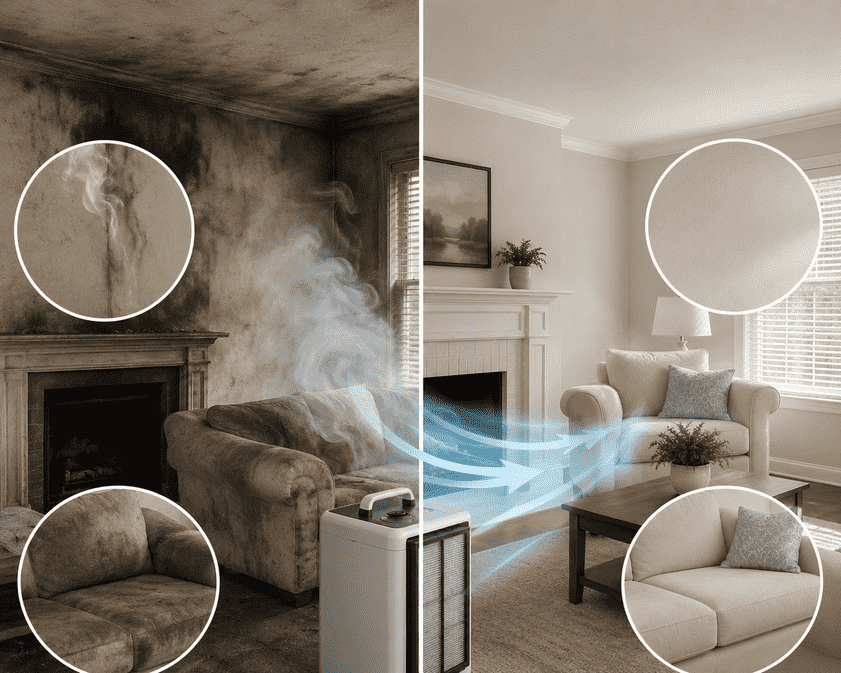
Lingering moisture behind walls or under flooring supports mold growth. Dehumidify and inspect for hidden leaks.