Soot removal from walls and ceilings should be done by professionals if the damage covers large areas or involves oily, acidic residue. While small dry soot patches can be wiped using dry cleaning sponges, widespread or greasy soot requires HEPA vacuuming, chemical cleaning, and odor neutralization performed by certified fire restoration experts.
When Soot Becomes a Serious Problem
After a fire, you might think the cleanup is simple, wipe the black stains and repaint. But soot damage is far more complex. Soot is a fine, acidic carbon residue that clings to walls, ceilings, vents, and hidden surfaces. It’s not just unsightly; it’s toxic, corrosive, and potentially hazardous to breathe.
Even a small kitchen or fireplace mishap can spread soot throughout your home through the HVAC system. Over time, soot continues to stain, etch, and degrade surfaces while releasing harmful particulates into your air.
At Bee Dry Restoration of Cleveland, we’ve seen countless cases where DIY cleaning made the situation worse. Before you grab a sponge, it’s important to understand what soot really is and when it’s time to call in professionals.

Understanding What Soot Really Is
Soot forms from incomplete combustion. When organic materials such as wood, plastics, or oils burn, they release carbon particles, ash, and toxic byproducts like sulfur dioxide and nitrogen oxides. These particles cling to surfaces as oily black residue.
There are several types of soot, and each requires a different cleaning approach:
Type of Soot | Source | Characteristics |
Dry Soot | High-heat fires from wood or paper | Light, powdery residue that wipes off easily |
Wet Soot | Low-heat, slow-burning fires | Sticky, smears easily, very odorous |
Protein Soot | Burnt food and kitchen fires | Nearly invisible, leaves greasy film and pungent smell |
Fuel-Oil Soot | Furnace puff-backs or oil burners | Heavy, oily, spreads fast through vents |
Knowing the difference is crucial because using the wrong cleaning method can push soot deeper into surfaces and lock in odors permanently.
The Hidden Dangers of Soot on Walls and Ceilings
1. Health Risks
Soot contains fine particulates smaller than 2.5 microns, which can penetrate lungs and bloodstream. Prolonged exposure may cause respiratory issues, asthma flare-ups, or skin irritation. The EPA classifies soot as a toxic pollutant.
2. Permanent Surface Damage
Soot is acidic. When left untreated, it reacts with moisture in the air, causing corrosion on metals, pitting on glass, and discoloration on walls or ceilings. Paint can bubble or peel, while drywall absorbs the residue deeper over time.
3. Odor Contamination
Even if stains are removed, the odor persists because soot embeds in insulation, ceilings, and HVAC systems. Unless neutralized through ozone or hydroxyl treatment, the smoky smell returns during humid weather.

DIY Soot Cleaning: What You Can and Can’t Do
When DIY May Be Acceptable
If the affected area is small, say a minor candle soot patch or a small wall section, you can perform light dry cleaning using the right materials.
Steps for light soot removal:
- Ventilate the area. Open windows and use fans to increase airflow.
- Wear PPE. Use gloves, goggles, and an N95 or P100 mask.
- Dry vacuum first. Use a HEPA-filtered vacuum (not a standard one) to remove loose soot particles.
- Use a dry cleaning sponge. Also called a chemical sponge, this lifts soot off surfaces without smearing.
- Avoid water initially. Moisture spreads soot, creating permanent streaks.
- Mild detergent rinse. If residue remains, use a gentle alkaline cleaner or Trisodium Phosphate (TSP) diluted with warm water.
- Dry completely. Residual moisture can reactivate odors or cause mildew.
DIY Don’ts
- Never use regular vacuums or feather dusters. They redistribute soot into the air.
- Avoid water on oily soot. Wet smoke spreads like grease.
- Don’t repaint immediately. Paint seals in odors and residues.
- Skip scented sprays. These only mask odors without solving the chemical problem.
For anything beyond minor damage, DIY cleaning can easily cause secondary contamination or make stains permanent.
When to Hire a Professional for Soot Removal
If your home has heavy or widespread soot contamination, or if the odor persists after cleaning, it’s time to call professionals like Bee Dry Restoration of Cleveland.
You Should Hire a Pro If:
- Soot covers multiple rooms or ceilings.
- The HVAC system is contaminated.
- Smoke odor lingers for days or weeks.
- You notice black streaks near vents or fans.
- Ceiling paint or drywall is discolored.
- Anyone in the home experiences headaches or breathing issues.
Why Professional Cleaning Works Better
Our technicians use industry-certified techniques that go beyond surface cleaning:
- HEPA vacuuming and air scrubbing to remove fine particulates.
- Dry-ice or soda blasting for structural soot removal.
- Ozone and hydroxyl generators to eliminate embedded odor molecules.
- Odor-sealing primers before repainting.
- HVAC decontamination to prevent re-circulation.
We follow IICRC (Institute of Inspection, Cleaning, and Restoration Certification) standards to ensure every trace of soot and smoke damage is safely removed.
The Professional Cleaning Process
- Assessment and Testing: We inspect every affected surface, including behind walls or above ceilings, and identify the type of soot residue.
- Containment: Plastic sheeting and negative air machines isolate contaminated areas to stop soot spread.
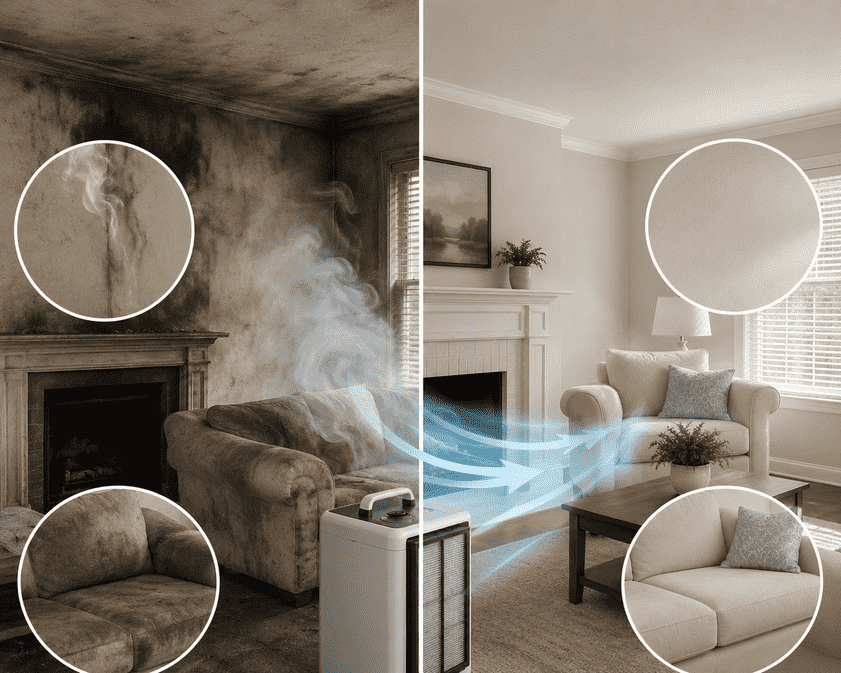
- HEPA Filtration: Industrial air scrubbers filter airborne soot particles and improve indoor air quality.
- Surface Cleaning: We use the correct method based on soot type:
- Dry sponges for dry soot.
- Degreasing detergents for wet soot.
- Ultrasonic cleaning for delicate contents.
- Odor Treatment: Ozone, hydroxyl, or vapor modification neutralizes the last of the smoke smell.
- Restoration and Repainting: Finally, cleaned walls and ceilings are primed with odor-blocking sealants and repainted.
The result: a clean, odor-free, and safe environment ready for re-occupancy.
How Long Does Soot Cleaning Take?
The cleanup timeline depends on how extensive the damage is.
Scope of Damage | Timeframe |
Small localized area | 1–2 days |
Multiple rooms with soot | 3–5 days |
Whole-house contamination | 1–3 weeks |
Professional cleaning is faster and more effective than DIY because industrial-grade equipment removes airborne soot that homeowners can’t reach.
The Cost of Professional Soot Removal
On average, soot removal costs range from $2,000 to $7,000 for moderate cases in Ohio, but prices can vary depending on:
- Square footage of affected areas
- Type of soot (wet vs. dry)
- Level of odor control required
- HVAC cleaning or insulation replacement
While DIY cleaning may seem cheaper, mistakes can lead to costlier professional restoration later. Hiring experts like Bee Dry Restoration often saves homeowners time and money in the long run.
The Long-Term Benefits of Professional Soot Cleaning
- Better air quality: Removes toxins, allergens, and microscopic soot.
- Odor-free environment: Odors are neutralized, not masked.
- Restored property value: Proper cleaning prevents permanent staining.
- Health protection: No lingering exposure to carcinogens or irritants.
- Insurance assistance: Professionals provide documentation for claims.
Why Bee Dry Restoration of Cleveland Is the Right Choice
Our team is trained, certified, and equipped to handle everything from minor soot stains to full-scale smoke restoration.
We offer:
- IICRC-certified fire and smoke restoration services
- 24/7 emergency response across Cleveland and nearby communities
- HEPA filtration, ozone, and hydroxyl odor removal systems
- Free inspections and detailed cost estimates
- Licensed and insured technicians with decades of experience
Whether it’s smoke cleanup, soot removal, or full odor elimination, Bee Dry Restoration ensures your home is safe, clean, and fully restored.
Frequently Asked Questions
Small patches can be cleaned with a dry chemical sponge and HEPA vacuum. For large or oily residues, professional cleaning is recommended.
Dry cleaning sponges and alkaline cleaners are effective. Professionals use HEPA filtration and degreasers for complete removal.
Yes. Soot contains fine carbon and toxic chemicals that irritate lungs and can cause long-term respiratory problems.
They use HEPA vacuums, wet cleaning agents, and air scrubbers to remove particles and odors safely.
Not without cleaning first. Painting traps soot and odors underneath, causing future discoloration and odor bleed-through.
Typically between $2,000 and $7,000, depending on the area size and soot severity.
If soot covers large surfaces, has a greasy texture, or smells strongly, hire certified professionals.
Soot removal from walls and ceilings is more than a cosmetic fix, it’s a health and safety issue. DIY cleaning may help for small areas, but widespread or oily soot demands professional attention.
Bee Dry Restoration of Cleveland provides full-service soot and smoke damage restoration using advanced filtration, cleaning, and deodorization systems. Our experts ensure your home is clean, safe, and odor-free again.
Call Bee Dry Restoration today for professional soot removal and smoke cleaning across Cleveland and Northeast Ohio.