Ever buy one of those dehumidifiers from the store, plug it in, and think, “That should fix the basement smell”? You’re not alone. A lot of Cleveland homeowners try that first. And to be fair, those little machines can help with sticky summer air or a damp bedroom.
But here’s the hard truth: DIY dehumidifiers just aren’t built to handle serious moisture problems. Whether it’s a musty basement, a crawlspace that always feels damp, or water damage after a storm, a portable unit can only do so much.
Let’s break down why.
Small Units Can’t Handle Big Problems
Most portable dehumidifiers are designed for one room. A typical unit might remove 20–55 pints of water per day. Compare that to whole-house or professional systems that pull 70–170 pints a day.
If your entire basement or home feels damp, that little machine is running nonstop without ever reaching the safe 30–50% humidity range recommended by the EPA.
Moisture Hides Where DIY Can’t Reach
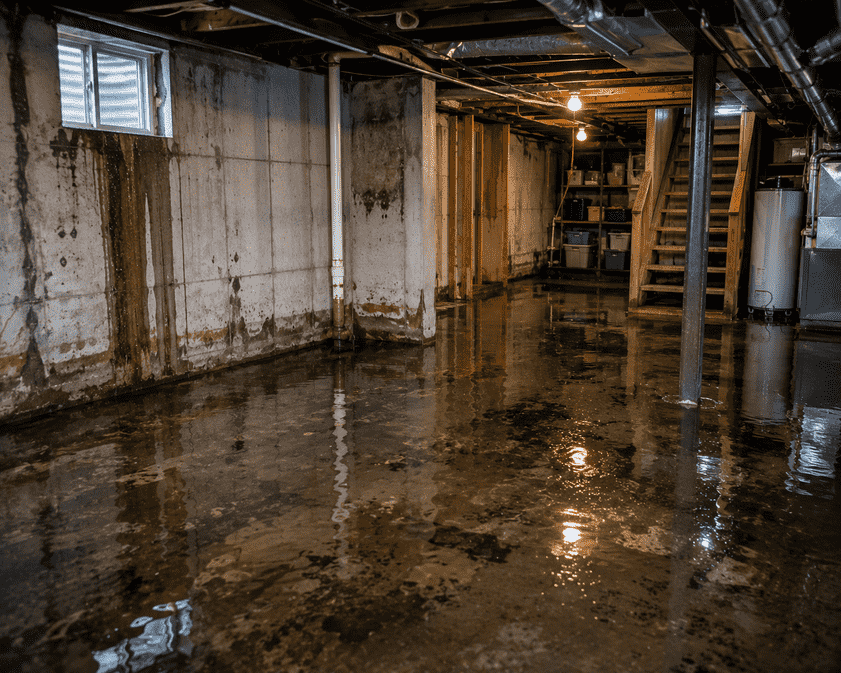
The musty smell you notice? That’s usually moisture trapped in walls, under floors, or inside insulation. A portable dehumidifier can’t touch that.
That’s why mold shows up even when you think the air feels “drier.” Professionals use moisture meters and industrial machines to pull water out of hidden spots before it causes lasting damage.

Common DIY Mistakes
Homeowners mean well, but here’s where DIY usually goes wrong:
- Buying a unit that’s too small for the space
- Running it in an open basement or crawlspace with windows cracked
- Forgetting to clean filters or empty buckets
- Letting coils frost up in cold basements
- Thinking odors will vanish without drying what’s behind the walls
- Turning the unit off too early before moisture is fully removed
- Not using enough airflow (no fans or air movers to assist drying)
- Ignoring hidden moisture in subfloors, insulation, or framing
- Placing the unit in the wrong location instead of targeting damp areas
- Assuming one unit can handle multiple rooms or levels
- Skipping moisture testing and relying only on “it feels dry”
- Using household fans instead of proper drying equipment
- Not addressing the source of moisture, so the problem keeps coming back
- Running dehumidifiers in temperatures that are too low for proper operation
- Overlooking HVAC systems that may be circulating humid or damp air
Most DIY setups handle surface moisture but miss what’s happening underneath. That’s where long-term damage, odors, and mold usually start.
The Real Risks of Excess Humidity
High humidity isn’t just uncomfortable, it can quietly damage your property and increase long-term costs:
- Mold Growth: Can begin within 24–48 hours after moisture buildup or water intrusion
- Health Issues: Dust mites, mold spores, and bacteria can worsen asthma, allergies, and respiratory problems
- Structural Damage: Wood warps, drywall softens, insulation loses effectiveness, and paint begins to peel
- Odors: Musty smells develop as moisture gets trapped in carpets, walls, and HVAC systems
- Energy Bills: Humid air feels warmer, forcing your AC system to run longer and work harder
- HVAC Strain: Excess moisture makes your system less efficient and can shorten its lifespan
- Condensation Problems: Moisture collects on windows, pipes, and surfaces, leading to hidden water damage
- Pest Attraction: Damp environments attract insects like termites, cockroaches, and other moisture-loving pests
- Material Deterioration: Flooring, cabinetry, and furniture can swell, crack, or break down over time
Controlling humidity early helps prevent bigger issues that are harder and more expensive to fix later.
DIY vs. Professional Dehumidification
Here’s a quick look at the difference:
Feature | DIY Portable Unit | Professional Dehumidification |
Capacity | 20–55 pints/day | 70–170+ pints/day |
Coverage | Single room | Entire home or building |
Hidden Moisture | Can’t reach | Detects and dries behind walls, floors, ceilings |
Monitoring | None | 24/7 with moisture mapping |
Risk of Mold | High if leaks/flooding | Mold prevention built in |
Cost | $130–$300 upfront | Avg. $1,300–$6,200 for full restoration, but prevents $10k+ damage later |
Why Professional Drying Works
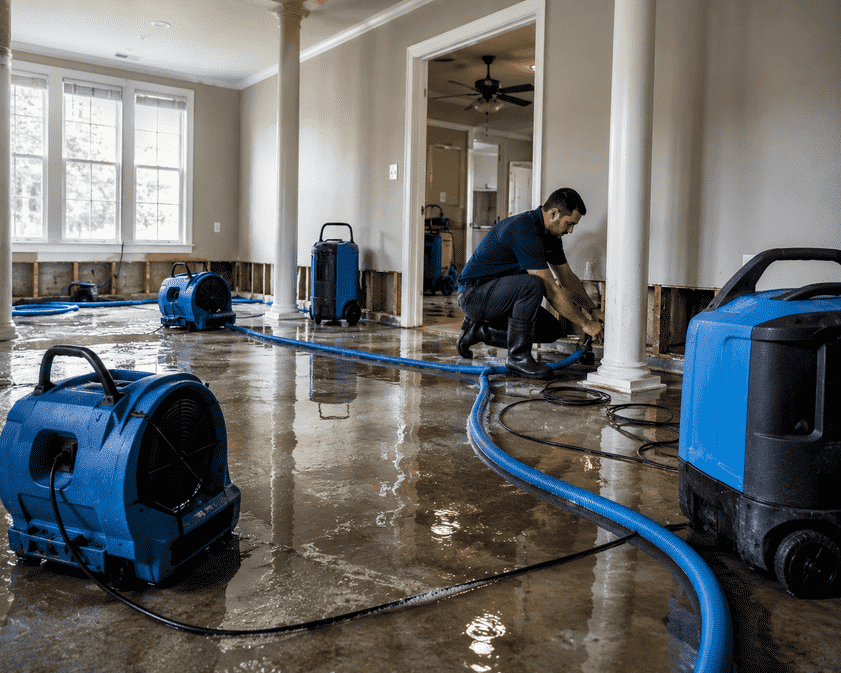
Restoration crews like Bee Dry Restoration don’t just set a machine in the corner and walk away. We use:
- Industrial-grade refrigerant & desiccant dehumidifiers
- Air movers & water extraction to speed up drying
- Moisture meters to track what you can’t see
- Strategic placement & adjustments until your home is truly dry
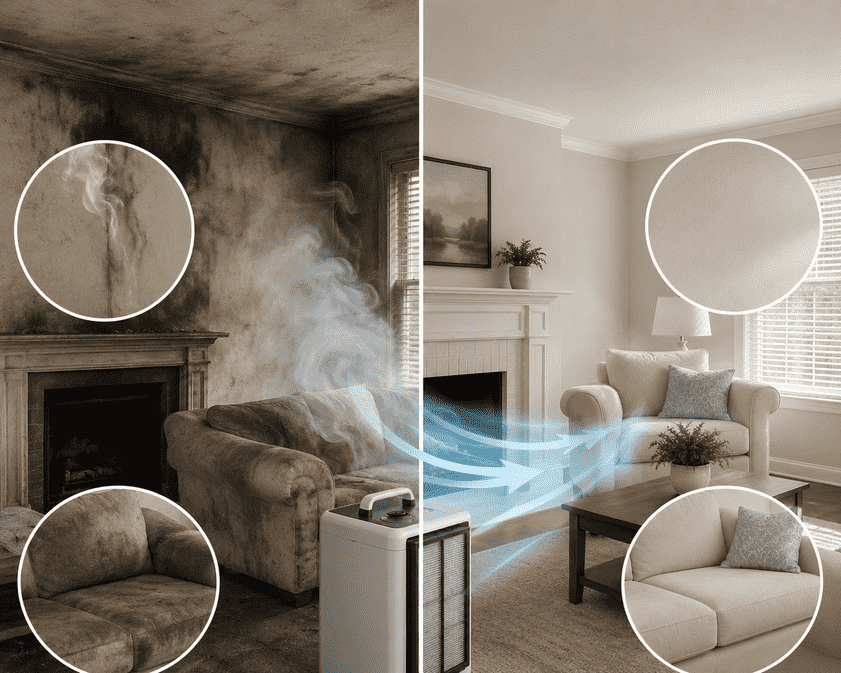
The goal isn’t just comfort, it’s protecting your family’s health and your home’s value.
Bottomline
In our area, with humid summers, lake-effect moisture, and older basements, DIY dehumidifiers give short-term relief but they don’t solve the problem.
If you’re noticing:
- Musty odors that won’t go away
- Condensation on windows or pipes
- Mold patches creeping up walls
- A damp crawlspace or basement year-round
…it’s time to call in the pros.
Bee Dry Restoration of Cleveland offers 24/7 professional dehumidification and water-damage restoration. We’ll bring the right equipment, certified technicians, and the know-how to dry your home properly before small problems turn into big, expensive ones.
Frequently Asked Questions
Portable dehumidifiers can help in small rooms, but they lack the capacity to control humidity across an entire home. Whole-house or professional systems are needed for lasting results.
Mold often grows in hidden places like drywall, flooring, or insulation. Portable dehumidifiers only dry the air, not the structure. Professional drying removes hidden moisture that fuels mold growth.
Mold can start developing within 24 to 48 hours of water exposure. That’s why professional dehumidification and structural drying are critical immediately after leaks or flooding.
No. Running a dehumidifier in an open or unsealed basement lets humid outdoor air enter, making the unit ineffective. Basements should be sealed for proper moisture control.
Most store-bought units stop working well below 65°F because coils freeze over. Professionals use desiccant dehumidifiers that perform in low-temperature settings.
A portable unit costs $130–$300, but professional water-damage restoration averages $3,814. While DIY seems cheaper, ignoring hidden moisture can lead to repairs costing $10,000 or more.
Not always. Musty odors usually mean hidden moisture or microbial growth. A dehumidifier may reduce surface humidity, but professional drying is required to eliminate the source.